Master the MACD: A Practical Guide to Smarter Trading.
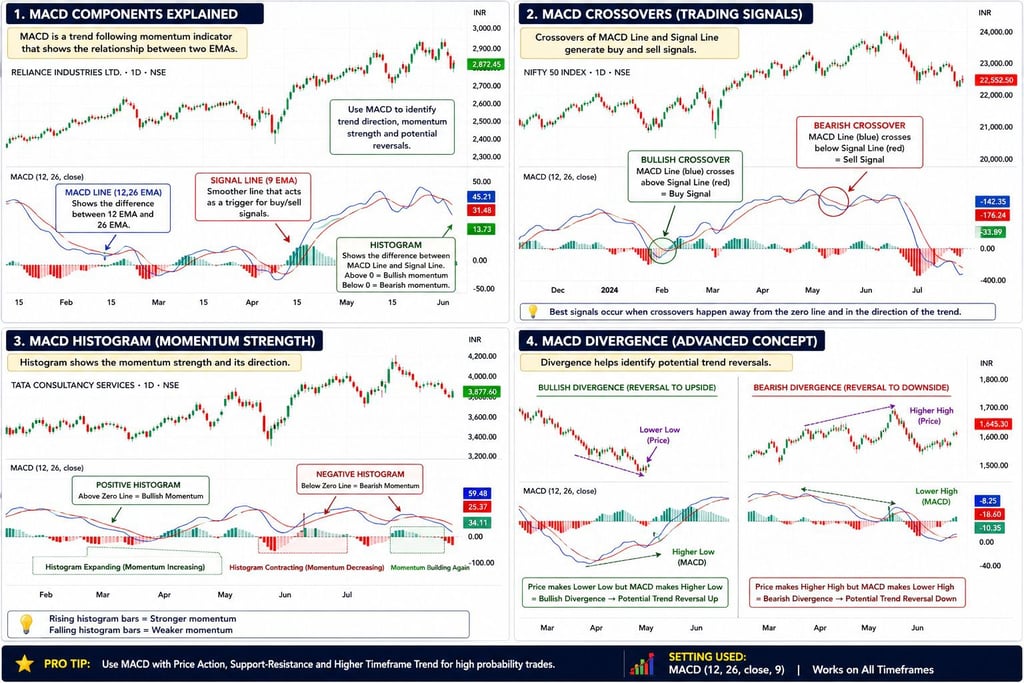
The Moving Average Convergence Divergence (MACD) is often the first "fancy" indicator a trader learns, but it’s frequently the most misunderstood. It’s not just a mess of lines; it’s a momentum engine that tells you how fast the market is moving and where it might be heading. If you want to stop chasing signals and start trading with precision, here are five proven strategies to master the MACD.
4/19/20263 min read
Master the MACD: A Practical Guide to Smarter Trading.
Introduction
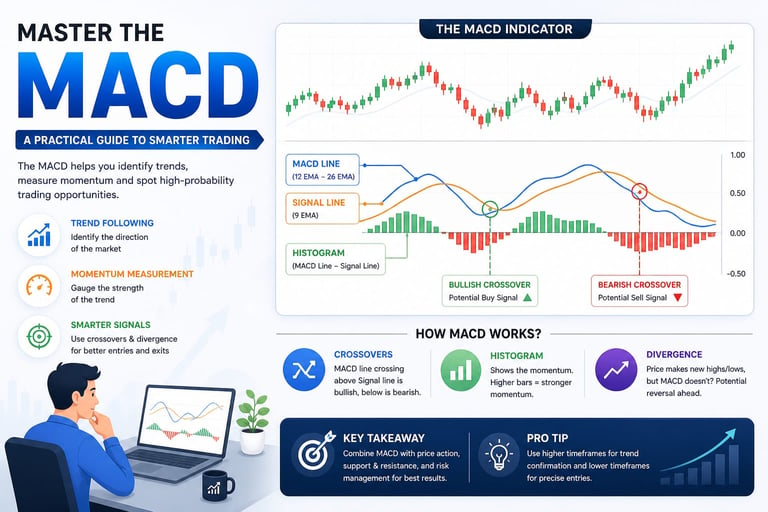
The Moving Average Convergence Divergence (MACD) is often the first 'fancy' indicator a trader learns, but it’s frequently misunderstood. It’s not just lines—it’s a momentum engine that reveals how fast the market is moving and where it might be heading.
1. The Crossover: Precision Entry Timing
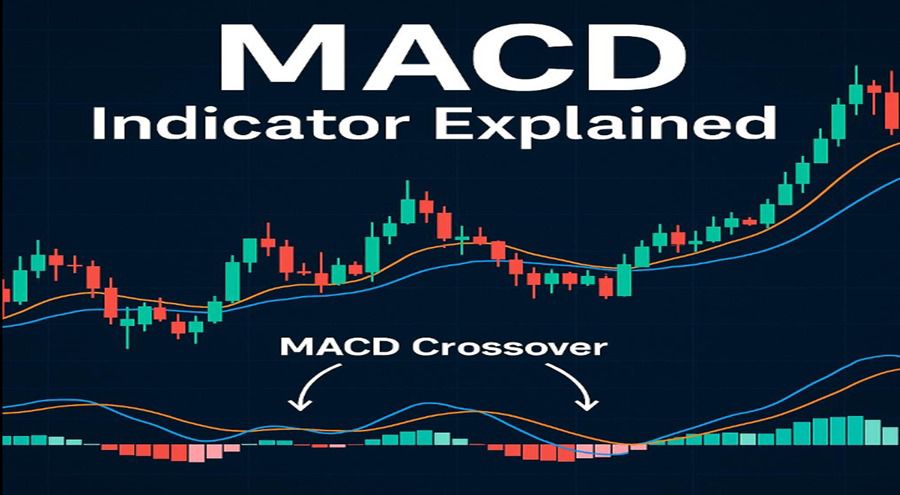
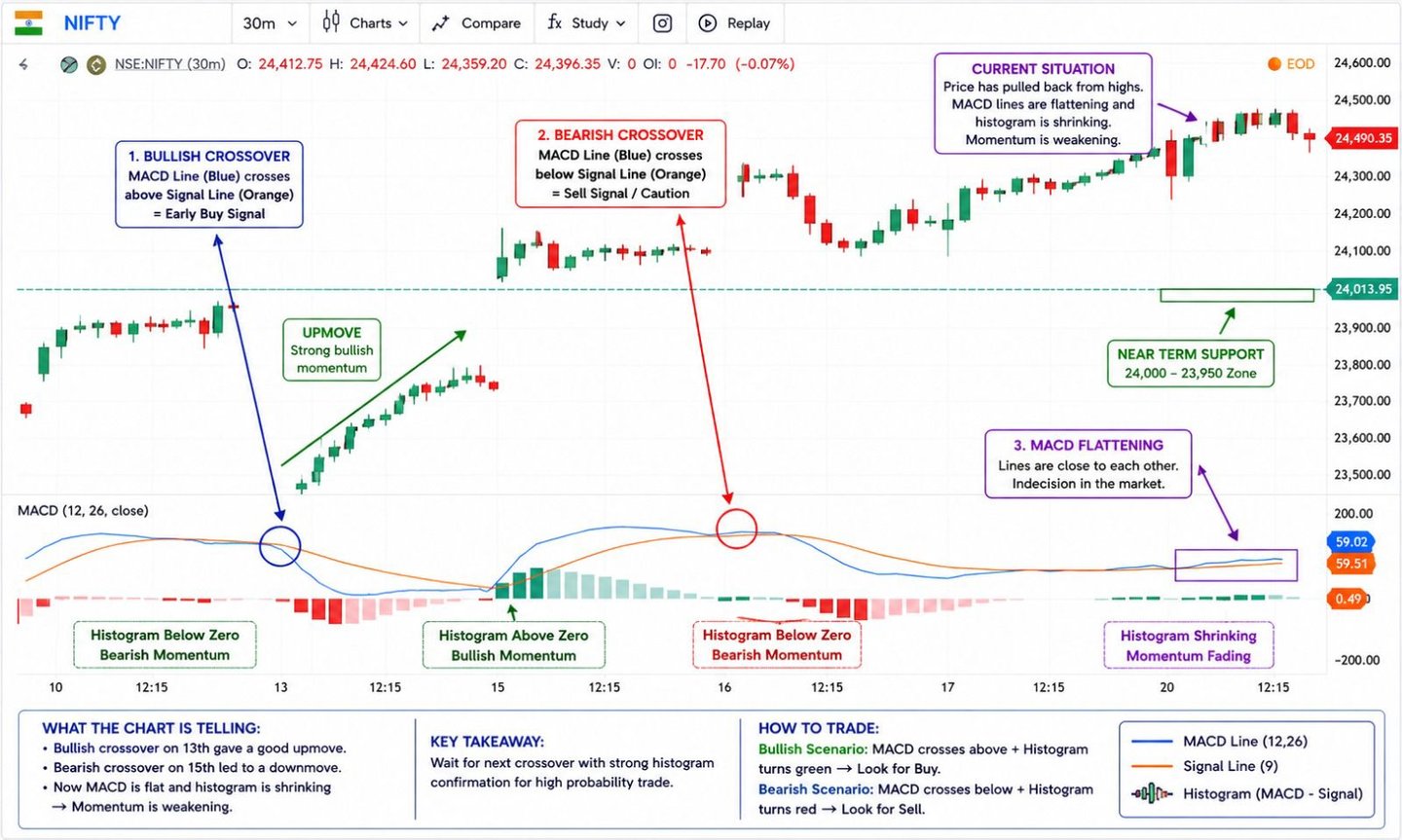
The classic crossover—where the MACD line crosses the Signal line—is your green light for momentum. However, "blindly" buying every cross is a recipe for getting chopped up in sideways markets.
The Buy Signal: Wait for the MACD to cross above the Signal line.
The Professional Edge: Don’t jump in immediately. Wait for a confirmation candle (a solid green candle closing after the cross) and look for crossovers happening near established support levels.
The Exit: When the MACD crosses below the Signal line, don't panic-sell everything, but treat it as a loud warning to tighten your stop losses or take partial profits.
2. The Zero Line: Your Trend Compass
The Zero Line is the "equator" of the MACD. It separates the bulls from the bears and acts as a filter for high-quality trades.
MACD Position
Market Sentiment
Trading Bias
Above Zero
Bullish Momentum
Look for Buy setups only
Below Zero
Bearish Momentum
Look for Sell setups only
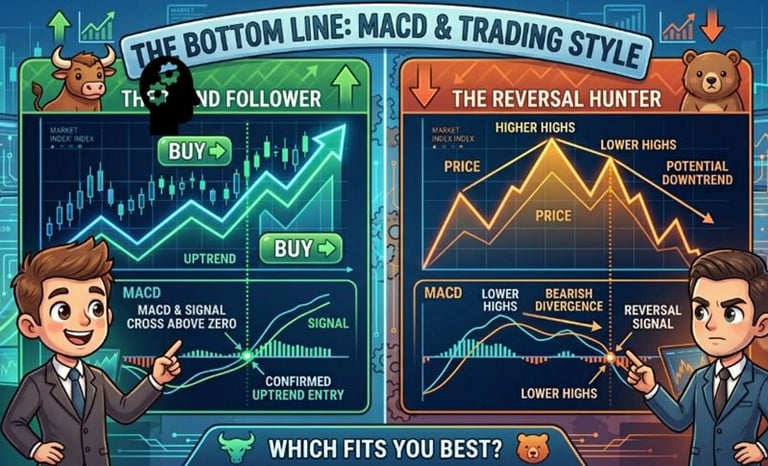
The Golden Rule: Only take crossovers that align with the Zero Line. If the MACD is far below zero and crosses up, it might just be a minor bounce. If it crosses up while already above zero, you’re trading with the wind at your back.
3. Divergence: Spotting Reversals
Divergence is like a "check engine" light for a trend. It occurs when the price action and the MACD indicator stop moving in sync.
Bullish Divergence: Price makes a lower low, but the MACD makes a higher low. This suggests the selling pressure is exhausting.
Bearish Divergence: Price makes a higher high, but the MACD makes a lower high. This suggests the buyers are losing steam.
Note: Divergence is an early warning system, not a command to trade. Always wait for a trendline break or a crossover to confirm the reversal.
4. The Histogram: Reading Momentum Strength
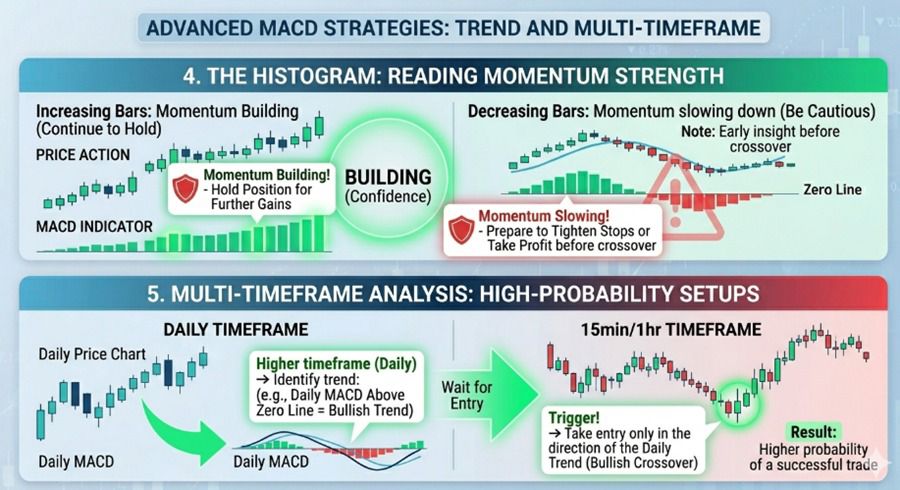
The bars behind the lines—the histogram—represent the distance between the MACD and the Signal line. They provide the earliest insight into momentum shifts.
Growing Bars: Momentum is accelerating. Hold your position.
Shrinking Bars: Momentum is fading. This often happens before a crossover occurs.
Practical Use: If you are in a long trade and notice the histogram bars getting shorter, the "fuel" is running out. It’s time to be cautious and protect your capital.
5. Multi-Timeframe Analysis
Trading on a single timeframe is like looking through a keyhole. To see the whole room, you need to zoom out. By combining timeframes, you significantly increase your win rate.
The Anchor (Daily): Use the Daily chart to identify the overall trend (is the MACD above or below the Zero Line?).
The Trigger (15m/1hr): Move to a lower timeframe to find your entry.
The Strategy: Only take buy signals on the 15-minute chart if the Daily chart is also in a bullish trend.
6.The Bottom Line
The MACD is a versatile tool, but its true power lies in confirmation. By combining crossovers with the Zero Line filter and watching for divergences, you move away from "guessing" and start trading based on measurable market momentum.
Which of these MACD strategies fits your current trading style best—are you a trend follower or a reversal hunter?
© Trend Engineer | trendengineer.com